
A paver patio lasts when the work under it is done right. Leatherneck Landscaping builds about 8 inches of compacted 3/4-inch limestone and sand before the pavers go down: the soil comes out, the limestone is compacted in lifts, and a sand bedding layer is screeded level. Edge restraint and a slope for drainage finish the structure. That work is what keeps a patio from sinking, heaving, or drifting on the clay soils common across North Texas, including Johnson, Ellis, and Tarrant counties.
Why does the ground under a patio matter more than the pavers?
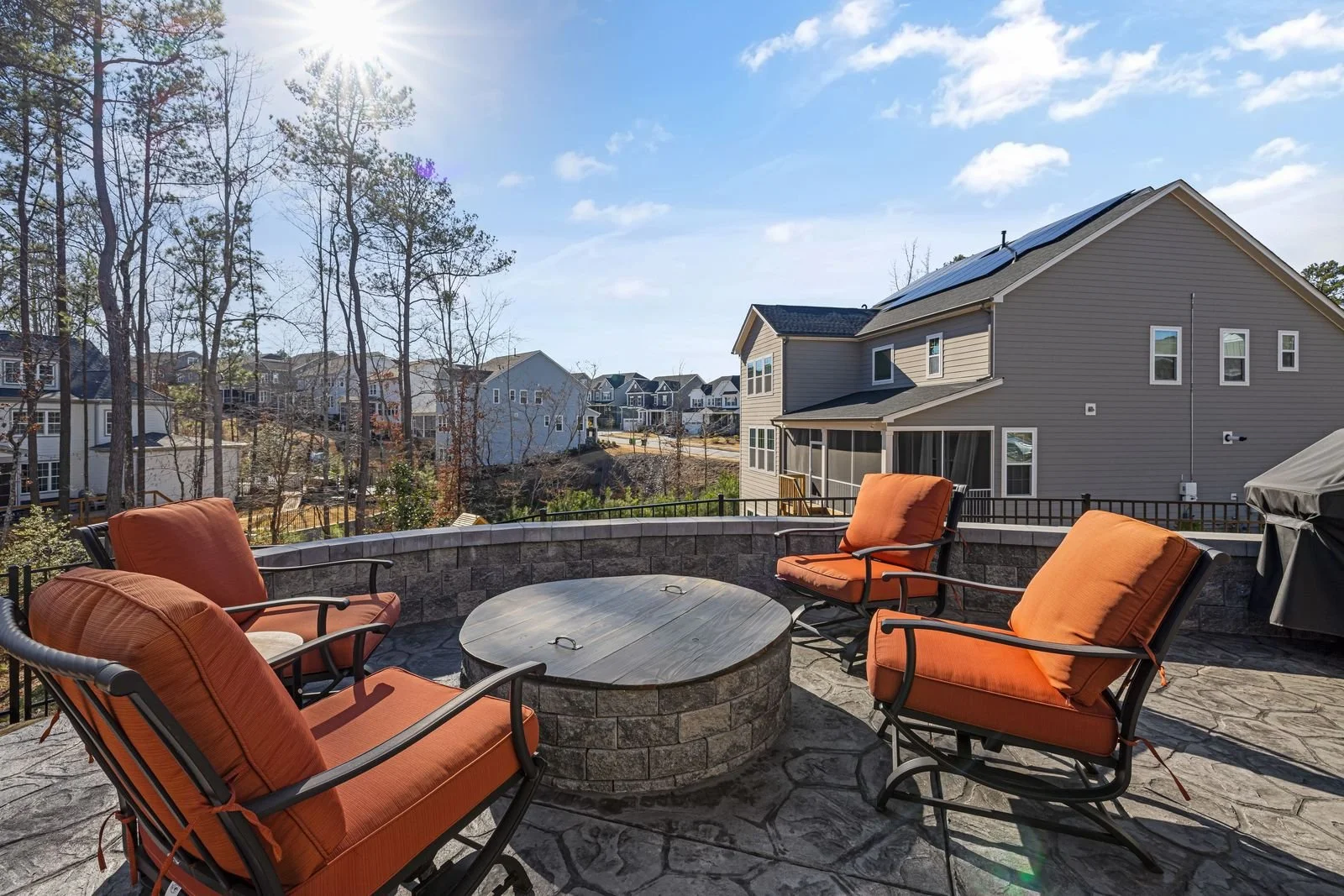
Example paver patio (example photo, not a Leatherneck job)
Industry installation guides treat soil and base preparation as the largest part of the job. The Interlocking Concrete Pavement Institute, whose consumer guidance is now published by the Concrete Masonry & Hardscapes Association, notes that preparing the soil subgrade and aggregate base typically takes up to 70 percent of the labor time.
A paver patio is a layered system: compacted soil, a crushed-stone base, a thin sand setting bed, the pavers, and a solid edge that keeps the field from spreading. The stone carries the weight and helps water move. The sand is only a bedding layer, not a way to hide a rough or shallow base.
What does 8 inches of ground work include?
Leatherneck's standard is about 8 inches of compacted 3/4-inch limestone and sand. The exact depth is set to the site, but the steps are consistent.
Excavation and haul-off. The crew removes the soil to make room for the base and bedding, including roots and organic matter that would leave voids later. The excavated dirt is hauled off. Before any digging, underground utilities should be marked by calling 811.
A compacted 3/4-inch limestone base, placed in lifts. The stone is spread and compacted in lifts, a few inches at a time, rather than dumped in one deep pile. Industry guidance for interlocking pavers puts a minimum compacted base for patios and walkways at 4 inches over well-drained soils, with thicker bases for driveways and for weak or poorly drained soils. North Texas clay is often in that second group.
Sand, edge restraint, and slope. After the limestone is compacted and graded, a consistent sand layer, typically about an inch, is screeded smooth. Sand should not be used to fill dips in a poorly compacted base. A solid restraint around the perimeter keeps the pavers from migrating and the bedding sand from washing out. The patio is graded to shed water away from the house. Industry guidance for interlocking concrete pavement calls for a slope of at least 1.5 percent, and often about 2 percent away from the house.
Why is this especially important on North Texas clay?
Much of the service area sits on expansive clay, including soils of the Blackland Prairie. Texas A&M AgriLife Extension describes the cycle in plain terms: when clay soil becomes extremely dry, it shrinks; when moisture returns, the clay expands and can lift what sits on it. AgriLife's Travis County office notes that Blackland Prairie clays form wide cracks and can heave objects such as fence posts and patios. USDA soil survey material on Houston Black, the classic Texas Blackland clay, makes the same point: these soils shrink and swell markedly as moisture changes, and that high shrink-swell potential is a limitation for building sites.
A patio set on a thin or loosely compacted base will move with that soil. Soft spots settle, the surface can heave, joints open, weeds take hold, and pavers begin to shift. Without a proper edge restraint, the field can creep. A compacted stone base of the right depth, with a slope that keeps water moving, will not stop the clay from existing, but it does keep the walking surface much more even through wet and dry stretches.
Do you install paver patios in Mansfield, Midlothian, and nearby?
Yes. Leatherneck Landscaping is a Marine veteran-owned company based in Venus, Texas. Paver patios and other hardscaping are available for homes and businesses in Mansfield, Burleson, Arlington, Kennedale, Midlothian, Waxahachie, Alvarado, and Venus, plus nearby communities in Johnson, Tarrant, and Ellis counties. Call or text 817-875-1409 to confirm your address.
You can see how this work fits with other outdoor improvements on the Landscaping page, and on the Hardscaping page for a closer look at patios and walls. For the same ground-work approach on a wall, read Why Retaining Walls Need 8 Inches of Ground Work. To get a quote, call or text 817-875-1409, or fill out the free quote form. Share your address and a note about the patio you have in mind.
Frequently asked questions
Why do you build about 8 inches under a paver patio? Leatherneck builds about 8 inches of compacted 3/4-inch limestone and sand under the pavers. That combined base and bedding depth is the company's standard for North Texas soil, and it can be adjusted to the site.
Can I set pavers on a thin layer of sand over the clay? No. Sand is only a bedding layer, typically about an inch, over a compacted stone base. Set on clay alone, pavers tend to sink, heave, and shift as the soil wets and dries.
What happens if the base is not compacted in lifts? The base will not densify evenly, and the patio is more likely to settle in soft spots. Compacting 3/4-inch limestone in lifts is what gives the base its strength.
Do you build paver patios in Midlothian, Waxahachie, and Alvarado? Yes. Leatherneck installs paver patios throughout its service area, including Midlothian, Waxahachie, Alvarado, Mansfield, Burleson, Arlington, Kennedale, and Venus. Call or text 817-875-1409 to confirm your address.
Ready for a patio that stays level?
If you want a paver patio built on proper ground work, Leatherneck can handle the excavation, the compacted limestone base, the sand, and the finished surface. Call or text 817-875-1409, or request a free quote today.